Soundproofing Interior Walls
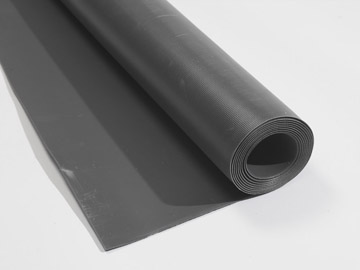
dB-Bloc is a high-performance mass loaded vinyl (MLV) sound barrier designed to reduce noise transmission through walls and ceilings. Ideal for soundproofing homes, offices, and commercial spaces, dB-Bloc effectively blocks airborne and impact noise, creating quieter environments.
The secret to dB-Bloc’s effectiveness lies in its high-density composition, which absorbs sound energy and prevents vibrations from transferring between surfaces. By decoupling walls and ceilings, it minimizes noise bleed into adjoining rooms, making it a top choice for soundproofing projects.
Need help? Call 1-800-638-9355 for expert advice!
Mass & Damping: How dB-Bloc Blocks Sound
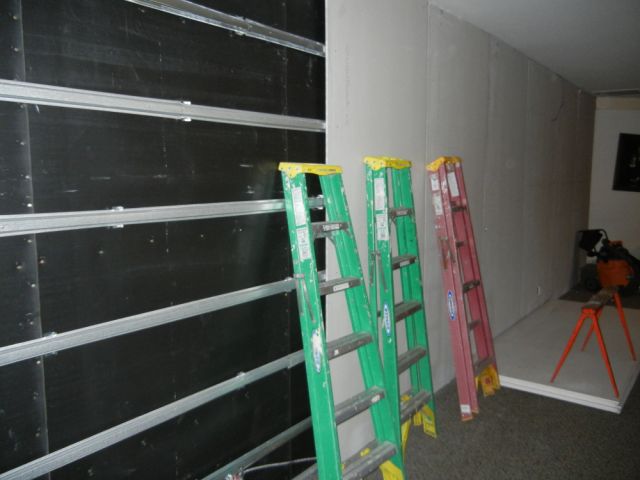
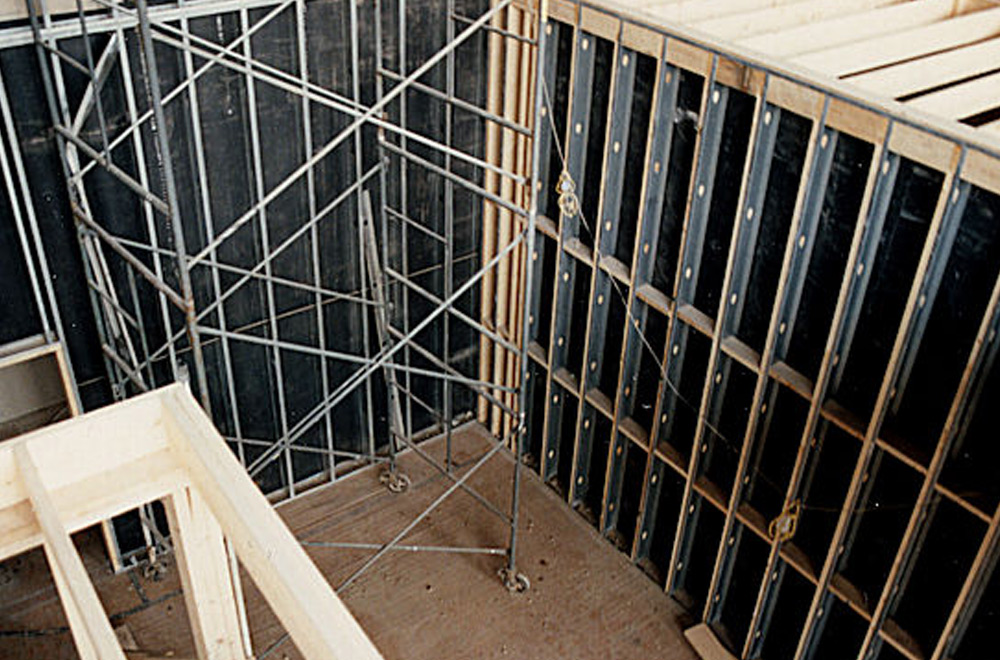
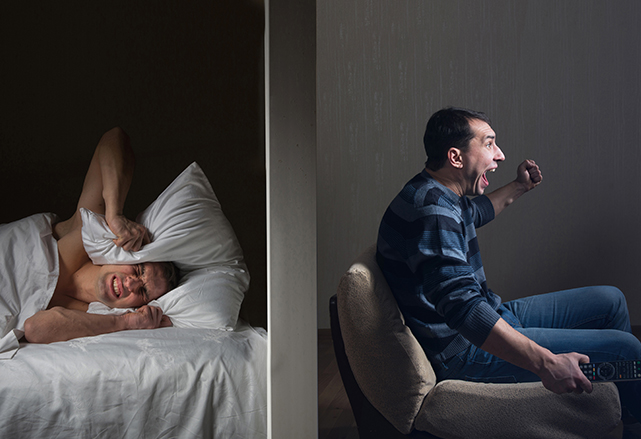
The high-density mass of dB-Bloc is key to its superior soundproofing performance. Sound travels as vibrations through air and solid materials, but when these waves hit dB-Bloc’s mass loaded vinyl (MLV) barrier, they are absorbed and converted into small amounts of heat through internal damping. This process reduces noise transmission and prevents sound from passing through walls and ceilings.
For maximum effectiveness, dB-Bloc should be integrated into a layered wall or ceiling system that includes decoupling to further disrupt vibration transfer. Whether you’re working on a new build, renovation, or retrofitting existing walls, this mass loaded vinyl sound barrier helps prevent noise bleed between spaces.
Think of it like silencing a tuning fork—if a surface can’t vibrate, it can’t transmit sound. dB-Bloc’s density forces the collapse of vibrations, much like placing your hand on a ringing wine glass, guitar string, or drumhead.
For more information on dB-Bloc applications, explore the links below:
See Wall Treatment See Ceiling Treatment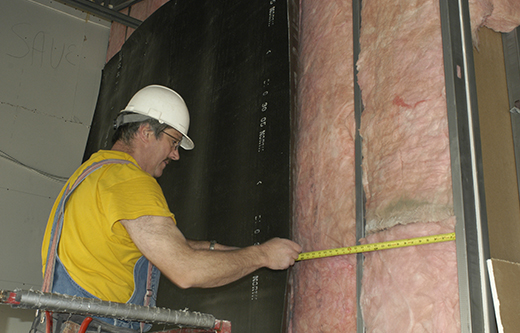
Pricing
dB-Bloc is shipped in 54” x 30’ rolls. Each roll will weigh 150 pounds and cover 135 square feet. Orders can be placed online using the link to the left or by phone to 1-800-638-9355.
Order By PhoneHow to Soundproof a Wall with dB-Bloc
Using dB-Bloc mass loaded vinyl (MLV) sound barrier is a key step in soundproofing walls, but for the best results, it should be part of a complete acoustic treatment system. To effectively block noise transmission, it’s essential to decouple the framing and add layers that absorb and dissipate sound energy.
Steps to Soundproof an Existing Wall:
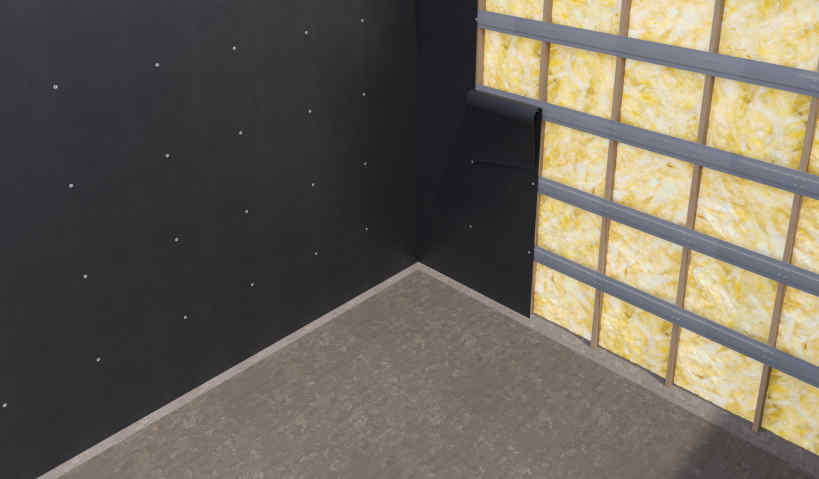
- Staple dB-Bloc directly onto your existing wall surface.
- Install a resilient channel system to create separation from the structure.
- Attach drywall to the resilient channel for added mass and sound reduction.
- Bonus: Add fiberglass insulation in the space between dB-Bloc and drywall to absorb resonance and prevent the triple-leaf effect.
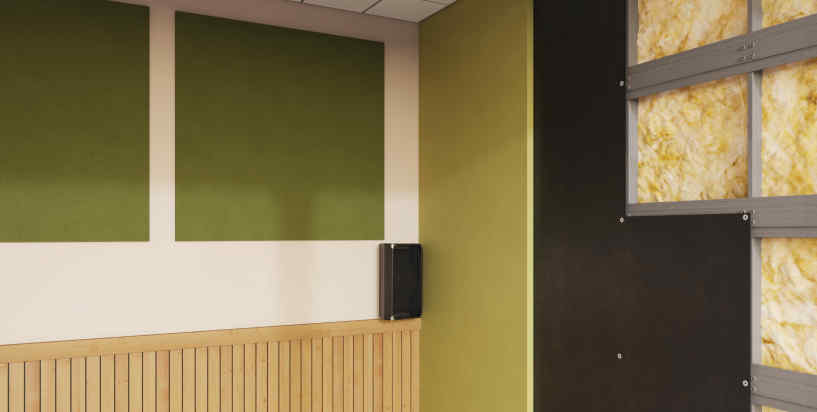
The diagram illustrates how resilient channels separate the drywall from the framing, preventing sound vibrations from transferring. A popular upgrade is using RSIC Clips, which further isolate the wall structure for maximum soundproofing performance. Simply anchor the RSIC Clips after installing dB-Bloc, snap hat channels into place, and finish with drywall.
For more detailed guidance, explore our Wall and Ceiling Soundproofing sections.
See RSIC Clips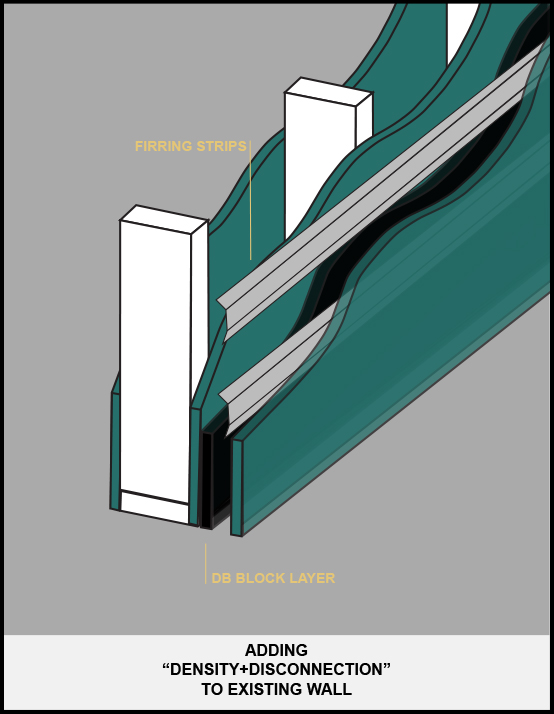
Soundproofing New Build & Remodel Walls
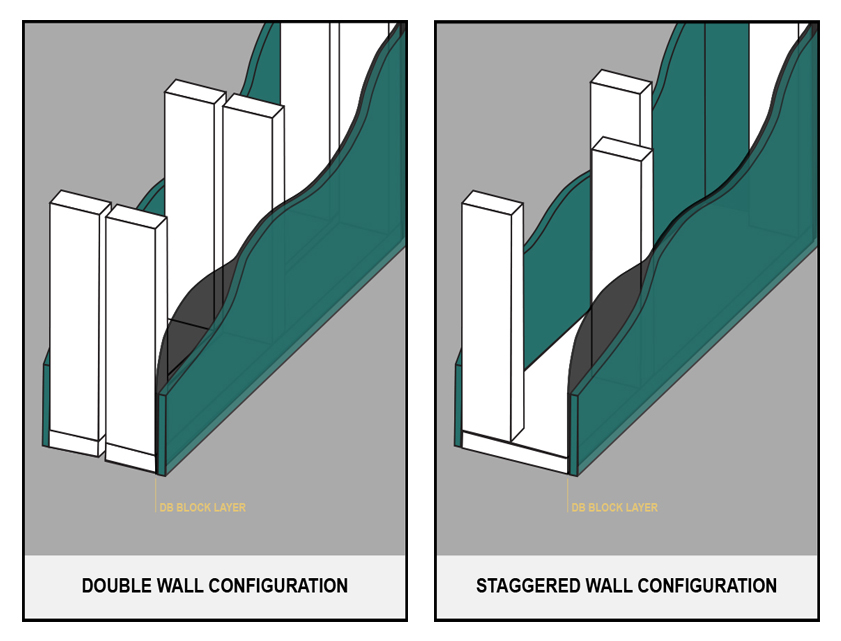
For new construction or remodels, the framing technique you choose plays a crucial role in soundproofing walls. Double-wall and staggered-stud framing naturally create a disconnection between adjoining rooms, eliminating the need for resilient channels or RSIC Clips to isolate the structure.
To maximize noise reduction, simply add the high-density mass of dB-Bloc to these framing methods. This combination effectively blocks sound transmission by collapsing vibrations before they pass through the wall assembly, ensuring superior soundproofing performance.
Need help with your project? Call 1-800-638-9355 for expert advice!
Sound Test Results
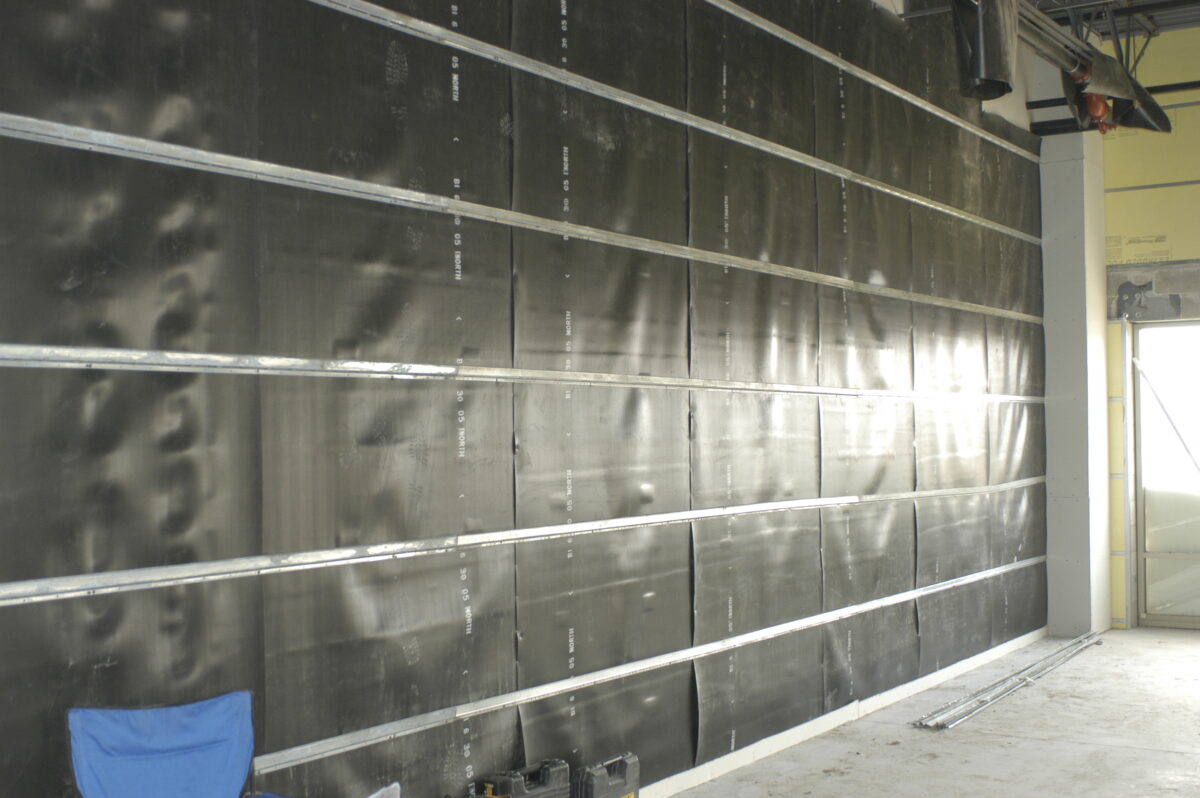
Field Test Results include framing + 5/8″ drywall both sides + dB-Bloc + channel system
Test results available upon request.
Maximizing Soundproofing with dB-Bloc
A properly installed dB-Bloc soundproofing system can transform a standard STC 33-35 wall into an STC 55-60+ barrier, achieving luxury-grade soundproofing as rated by the U.S. Government. This significant improvement helps block airborne noise and vibrations, creating a quieter environment.
However, noise leakage through electrical outlets, plumbing, ventilation, windows, doors, stairwells, and adjacent untreated surfaces can reduce overall soundproofing effectiveness. While no solution provides 100% sound isolation, dB-Bloc helps control noise transmission by adding critical mass to walls and ceilings.
On average, interior wall sound insulation with dB-Bloc can achieve a 10-12 dB noise reduction, though actual results will vary based on application and structural conditions. For optimal results, consider all potential airborne and structure-borne sound paths to minimize leaks and maximize sound control.
Shipping dB-Bloc
dB-Bloc is shipped in 54″ x 30′ rolls. Each roll will cover 135 sq ft and weigh nearly 150 pounds with the core. The density is what makes the treatment perform, but also makes the shipping heavy. Small orders of 1-2 rolls can ship via FedEx or UPS, while larger orders will ship via LTL Freight. Most clients opt for a lift gate that allows pallets to be lowered to the ground. Please inspect the order upon delivery and sign for anything that may have been damaged in transit. For questions related to your shipment, call our help desk at 1-800-638-9355.
Shipping/Receiving Terms & Conditions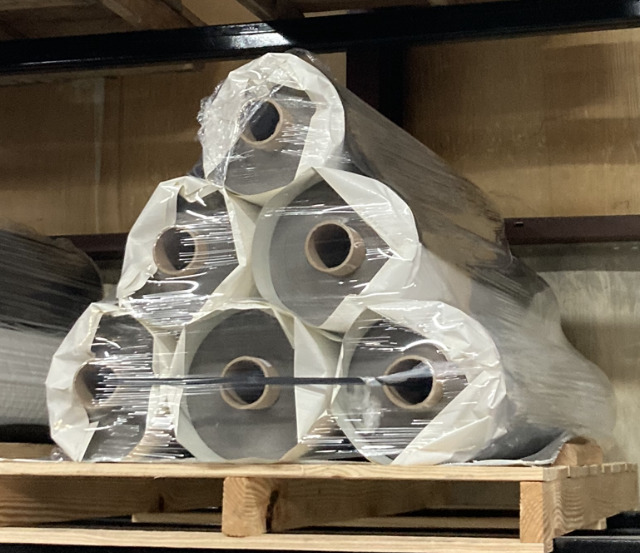
Soundproofing Walls Q&A
What is dB-Bloc?
dB-Bloc is a high-density, flexible sound barrier designed to block airborne noise and reduce sound transmission through walls, ceilings, and floors. It works by adding mass to surfaces, making it harder for sound waves to pass through.
How does dB-Bloc improve soundproofing?
By increasing the mass and density of a structure, dB-Bloc effectively blocks and absorbs sound vibrations. When properly installed, it can significantly improve the Sound Transmission Class (STC) rating of a wall or ceiling system, reducing unwanted noise between rooms.
What STC rating can dB-Bloc help achieve?
A standard STC 33-35 wall can be improved to STC 55-60+ when dB-Bloc is integrated into a complete soundproofing system with decoupling, insulation, and additional drywall layers.
Where should I install dB-Bloc?
dB-Bloc is ideal for soundproofing interior walls, ceilings, floors, doors, and machinery enclosures. It is commonly used in homes, offices, recording studios, and commercial spaces to control noise.
Can I attach dB-Bloc directly to drywall?
Yes, but for optimal results, it should be part of a layered system that includes resilient channels or RSIC Clips, insulation, and additional drywall layers.
Do I need to install dB-Bloc on both sides of a wall?
No, typically one side is sufficient when paired with decoupling methods like resilient channels or staggered-stud framing.
Can dB-Bloc be used in new construction and remodels?
Absolutely! dB-Bloc is effective in both new builds and renovations. It can be applied to existing finished walls or integrated into double-wall and staggered-stud framing in new construction.
What if my walls are finished?
Most of our clients are indeed retrofitting to an existing finished wall or ceiling assembly. Simply staple the dB-Bloc into place, add your resilient channel system, and then a new layer of 5/8” drywall. Adding a layer of fiberglass insulation between the dB-Bloc treatment and the final layer of 5/8″ drywall will reduce resonance in the air cavity and avoid the triple leaf effect.
Does it work on a ceiling?
Yes. Use the same layering sequence as walls – anchor dB-Bloc to your ceiling, add a channel system and/or our RSIC Clips, and a new layer of 5/8” drywall. Fill the air gap between the dB-Bloc & final layer of drywall with fiberglass insulation.
Does it work on a floor?
Yes, but note that we do offer a flooring underlayment called FloorFighter that we recommend you substitute in place of dB-Bloc. FloorFighter carries the same level of density but also has more of a cushioning effect to decouple foot noise.
How much coverage do I need?
dB-Bloc should cover 100% of the surface you are looking to soundproof. We recommend purchasing 10-15% extra to account for scrap.
Can I paint or finish over dB-Bloc?
dB-Bloc is not designed for direct painting. It should be covered with drywall, paneling, or another finishing material for the best aesthetics.
Does dB-Bloc completely block noise?
While no material provides 100% sound isolation, dB-Bloc is one of the most effective solutions for reducing airborne noise transmission when used correctly in a complete soundproofing system.
Does dB-Bloc help with impact noise?
dB-Bloc is designed primarily for airborne noise (voices, music, TV). To reduce impact noise (footsteps, vibrations), it should be combined with underlayment materials, isolation clips, or decoupling techniques.
How does dB-Bloc compare to Green Glue?
- dB-Bloc blocks sound through mass.
- Green Glue absorbs vibrations between drywall layers.
For maximum noise control, both can be used together—dB-Bloc to block sound and Green Glue to dampen vibrations.
How thick is dB-Bloc?
dB-Bloc is available in 1/8” thickness (1 lb per sq. ft.) and 1/4” thickness (2 lb per sq. ft.), depending on your noise control needs.
How much does dB-Bloc weigh?
- 1 lb per sq. ft. dB-Bloc (~1/8” thick) weighs 1 lb per square foot.
- 2 lb per sq. ft. dB-Bloc (~1/4” thick) weighs 2 lbs per square foot.
Is dB-Bloc safe and non-toxic?
Yes! dB-Bloc is lead-free, non-toxic, and safe for residential and commercial applications.
How much does dB-Bloc cost?
Pricing depends on thickness and order size, but 1 lb per sq. ft. dB-Bloc typically ranges from $1.50 to $1.80 per square foot.
Where can I buy dB-Bloc?
You can order dB-Bloc directly from NetWell Noise Control for the best pricing and expert guidance.
How long does it take to get?
dB-Bloc is typically a stock item ready to ship within 24-72 hours of your order, but please contact us for current lead times.
Contractor's Corner
Contractor’s Corner
If you are a contractor that has discovered the art of soundproofing a common surface with the use of our dB-Bloc layering sequence, we welcome you to our family of builders who know how to do it right. For you, we offer a free newsletter that delivers timely and helpful insights into the art of combating sound bleed through common wall or floor/ceiling assemblies. Sign up today and help spread our dB-Bloc treatments to future clients of yours!