Portable Soundproofing
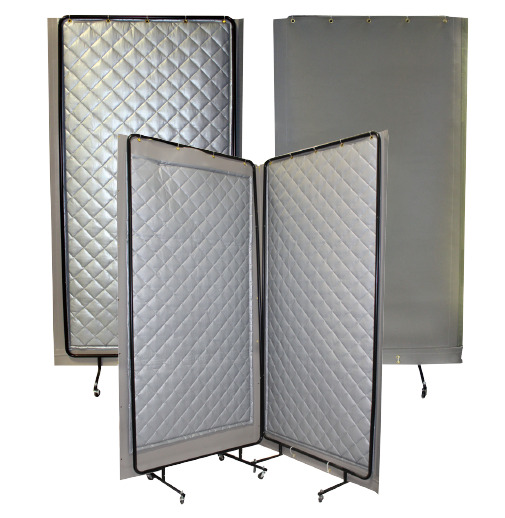
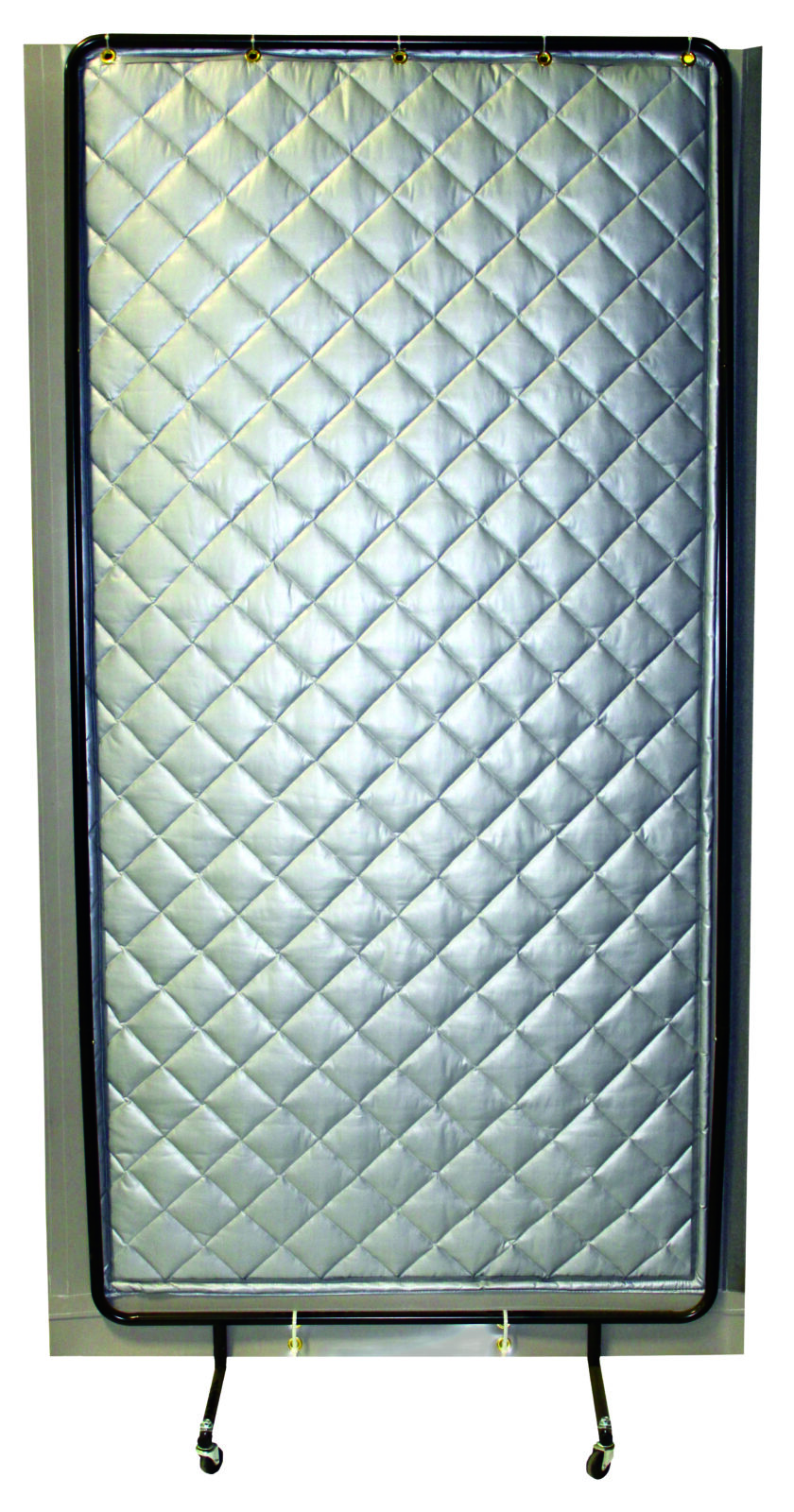
NetWell SoundScreens are portable, freestanding versions of our QB, QBS, and QBV acoustic blankets. Built on a powder-coated tubular steel frame with optional casters, they let you create partial enclosures and temporary noise barriers that roll into place and link together — no permanent construction required.
Choosing the Right Model
- QB — Absorption only. Two-sided quilted fiberglass absorber (NRC 0.85). The lightest, most portable option for taming echo and reverb. Open vertical edges for easy repositioning. Used in areas where portable absorption is required.
- QBS — Two-sided block + absorb. Loaded vinyl barrier sandwiched between two quilted fiberglass absorbers (STC 29, NRC 0.75). Absorbs on both faces and blocks transmission through the middle. Best for dividing shop floors or separating two active work areas.
- QBV — One-sided block + absorb. Full 2″ absorber bonded to a reinforced vinyl barrier (STC 32, NRC 0.85). Absorber faces the noise source, barrier shields the other side. Best when trying to block sound coming from one direction. Used for enclosing loud equipment or shielding offices from an industrial source.
Questions? Call 1-800-638-9355


Why Choose Portable SoundScreens?
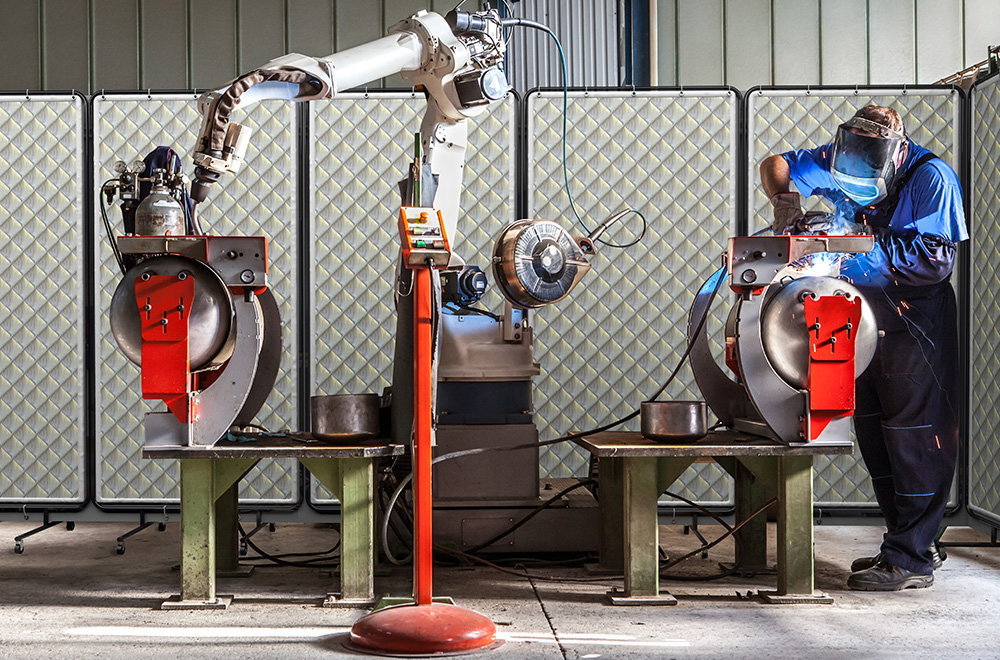
- Create temporary or semi-permanent acoustic enclosures to reduce sound transfer between noisy workstations, isolate loud equipment, and contain industrial noise on production floors.
- Mobile and reconfigurable — standard panels join together with Velcro to form any required layout, and optional casters make relocation simple. (Note: no velcro on QB-2 model)
- Rugged construction — powder-coated tubular steel frames with reinforced loaded-vinyl noise barrier and vinyl-faced quilted fiberglass absorbers.
- Cost-effective compared to permanent enclosures — collapsible framing allows economical shipping and storage.
Be sure to take a look at our other sound barrier blankets for all your soundproofing needs.
Pricing
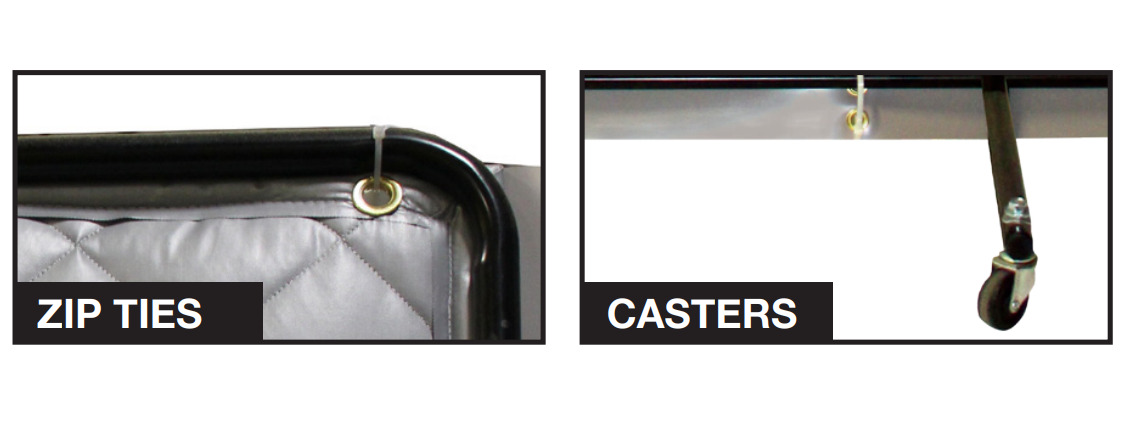
All SoundScreens include a stationary T-stand. Upgrade to snap-on caster wheels for increased mobility.
For questions related to your upcoming portable soundproofing needs, call our help desk at 1-800-638-9355. Orders can be placed by phone or online.
OSHA Noise Compliance & Employee Noise Exposure
Excessive workplace noise can contribute to employee fatigue, communication breakdowns, and long-term hearing damage. OSHA’s occupational noise exposure standard (29 CFR 1910.95) requires employers to implement controls when noise levels exceed permissible exposure limits (PEL).
Portable SoundScreens support industrial soundproofing strategies by helping isolate loud equipment and reduce sound transmission between workstations. By creating temporary acoustic enclosures around high-noise machinery, facilities can lower overall employee exposure levels and improve compliance within a structured hearing conservation program.
How Portable SoundScreens Help Reduce Employee Noise Exposure:
- Isolate compressors, pumps, test stations, and fabrication equipment
- Reduce sound transmission between adjacent work areas
- Create movable acoustic barriers around temporary processes
- Improve speech intelligibility and worker communication
- Support engineering noise controls before relying solely on PPE
Because SoundScreens are modular and mobile, they allow safety managers and plant engineers to deploy engineering controls quickly — especially in facilities where processes shift or equipment layouts change.
See Noise Reduction Blankets
Features
- Standard size: 54″ wide x 100″ tall (QBS-1 & QBV-2) & 48″ wide x 100″ tall (QB-2) (see detailed drawing below)
Industrial-grade construction: Powder-coated tubular steel frame with high-performance acoustic curtain panels
Multiple acoustic panel options: QB-2, QBS-1, and QBV-2 configurations available
Joinable units: Panels connect with Velcro seals to form larger acoustic enclosures or extended noise barriers (no Velcro on QB-2 model).
Rotating support legs: Legs rotate and lock securely at 0°, 45°, or 90°, allowing straight-line runs, angled layouts, or freestanding configurations
Mobility options: Available with stationary T-stands or optional snap-in caster wheels
Modular and reconfigurable: Easily reposition screens to isolate equipment or adjust to changing production layouts
Questions? Call 1-800-638-9355
View Assembly Drawing
Sound Test Results
This product is class A fire rated and approved for use in any public venue.
* Test results available upon request
Shipping & Lead Time
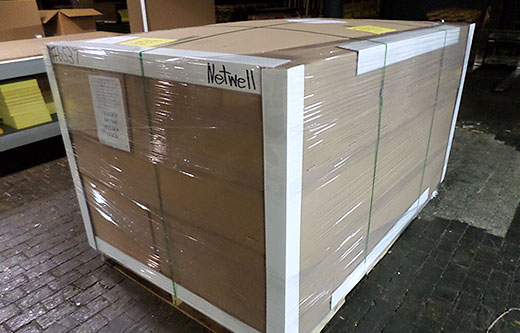
SoundScreens are palletized and shipped via common carrier. Production lead time typically averages 4 weeks, but can vary. If you are on a tight timeline, please email us to get the current lead time prior to placing an order.
For questions related to your order, please contact our help desk at 1-800-638-9355.
Shipping/Receiving Terms & Conditions
Portable SoundScreens FAQ
What are Portable SoundScreens used for?
Portable SoundScreens are mobile acoustic barriers designed for industrial soundproofing applications. They are commonly used to reduce sound transmission between workstations, isolate loud machinery, and create temporary acoustic enclosures around equipment in manufacturing facilities, test labs, and production floors.
What is the difference between QB, QBV, and QBS models?
The difference between QB, QBV, and QBS models comes down to absorption vs. barrier construction and overall sound isolation performance:
QB-2 (Absorptive Panel Only)
2″ thick vinyl-faced quilted fiberglass absorber
Primarily reduces reflected sound and airborne noise within a space
Best for reducing echo and improving speech clarity near equipment
QBV-2 (Absorber + Noise Barrier)
Vinyl-faced quilted fiberglass absorber bonded to a 1 lb/ft² reinforced loaded vinyl noise barrier
Provides both sound absorption and sound blocking
Recommended for reducing sound transmission between work areas
QBS-1 (Dual Absorber + Barrier Core)
1″ vinyl-faced absorber on both sides of a loaded vinyl barrier septum
Designed for applications where sound is present on both sides of the screen
Ideal for isolating noisy equipment between adjacent workstations
In short:
- QB = absorption only
- QBV = absorption + sound barrier (one side absorber, one side barrier)
- QBS = absorption on both sides + barrier core (dual-sided performance)
Which model is best for industrial noise control?
For industrial soundproofing and reducing sound transmission between work areas, QBV and QBS models are typically recommended because they incorporate a loaded vinyl noise barrier layer for improved isolation performance.
Do Portable SoundScreens meet OSHA requirements?
Portable SoundScreens support engineering noise control strategies under OSHA’s occupational noise exposure standard (29 CFR 1910.95). While they do not replace a full compliance program, they can help reduce employee noise exposure levels by isolating loud equipment and limiting sound transfer between workstations.
They are most effective when used as part of a comprehensive hearing conservation and industrial noise control plan.
Can multiple SoundScreens be connected together?
Yes. Units connect using Velcro seals, allowing you to create extended straight-line barriers, angled layouts, or partial acoustic enclosures around equipment (QBS & QBV models only). The QB model does not need to seal, as it does not require a continuous screen to function as an absorber.
Are Portable SoundScreens movable?
Yes. Screens are available with stationary supports or optional snap-in caster wheels for mobility. The support legs rotate and lock at 0°, 45°, and 90°, allowing flexible configurations around machinery and work areas.
Are Portable SoundScreens effective for temporary projects?
Yes. Because they are modular and mobile, SoundScreens are ideal for:
Temporary production runs
Equipment testing areas
Maintenance operations
Short-term construction noise control inside facilities