Soundproofing Loud Computer Racks
Computer Rack noise is distracting and loud. If you have employees stationed either inside the same room as the racks, or in an adjoining room that shares a common wall to the computer room, the employees will be exposed to uncomfortable levels of noise that will hinder their work environment and impede their productivity. Soundproofing computer servers can be done using sound barrier blankets and noise control panels.
Questions? 1-800-638-9355
Noise Reduction For Your Computer Rack
The goal with soundproofing your computer servers is to isolate the server racks’ noise to a contained area and protect employees around its perimeter. This is accomplished using Sound Barrier Blankets that block directional sound, they can be floor mounted or ceiling suspended. The blankets will combine to lower the noise exposure levels within the room, or block the noise from transmitting through common wall surfaces.
The compliment to the treatment is to then place sound absorption panels inside the contained area to reduce the reflected pressure and dissipate the noise that might otherwise leak out through exposures, openings, doors, ventilation systems, plenum space and more. Place the sound absorption panels inside the area defined by the blankets to maximize your noise reduction levels.
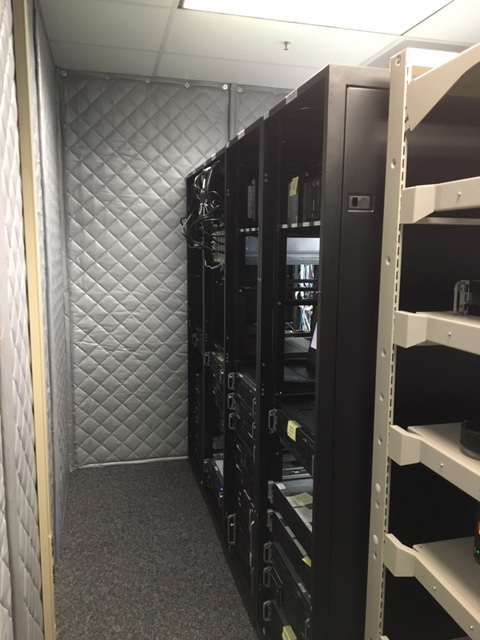
Computer Room Noise Control Curtains
QBS Sound Barrier Blankets are class A fire rated and approved for use in your space. We will custom cut these noise reduction curtain systems to the cavity size that works best for your space requirements. The blankets should be hung out in front of the computer racks to protect those inside the room, and against any wall that is common to an adjoining room where the noise is bleeding into.
See QBS Blanket
Reducing Computer Rack Noise Exposure
In addition to using the QBS Sound Barrier Blankets to block directional sound, we recommend our Pyramid Noise Reduction Foam to compliment your soundproofing treatment. Line the noise reduction foam on available surfaces inside the blanketed area to reduce the noise being trapped by the blankets. Pyramids will help control leakage as the QBS Blankets block the noise.
Why Computer Racks Love Noise Reduction Curtains
QBS Sound Barrier Blankets are class A fire rated, durable, portable and easy to self install. They can be taken down with ease for maintenance on the computer racks. Care should be given for proper ventilation, which is why a computer rack enclosure project always leaves room for ventilation. The FireFlex Panels will help slow any leakage that may otherwise result. QBS Blankets can block up to 90% of your bleeding noise.
See QBS Blankets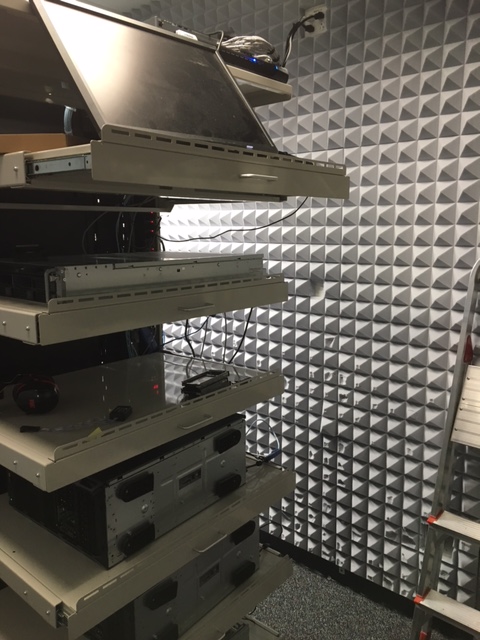
Next Steps to a Quiet Server Room:
Measure Your Room
We need the cubic footage of your space. Measure your room’s length, width, and height.
Submit Room Analysis
Use the button at the top or bottom of this page to submit your room’s dimensions.
Approve the Quote
We will define the framework for your treatment and submit back your quote for approval.
Self Install
Your sound panels will drop ship to your doorstep. Our treatments are cost effective, and designed for self-installation.
Acoustic Foam for Server Rack Noise
While the QBS sound barrier blankets do their job and house the noise to within your contained area, the best compliment to the treatment not to ignore is to add a set of Pyramids to the back wall behind your computer racks. This acoustic foam is class A fire rated, and will help to capture and convert the trapped sound pressure held inside your computer room. The result? Less echo, and less leakage through open flanking paths.
See Pyramids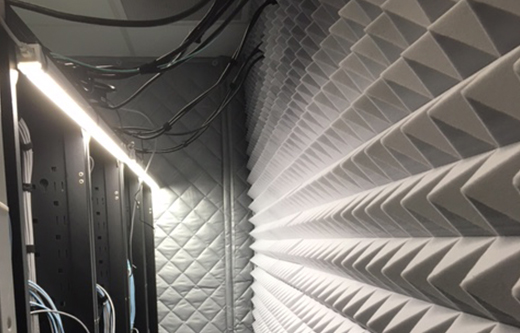
Computer Room Noise Control: Q&A
How to quiet my computer server
The proper design for a sound insulated Computer Room depends on whether there are employees working in the same room as your computer racks. In this case, the goal will be to isolate the Computer Rack noise using a set of floor mounted QBS Blankets. Position them between the Computer Racks and the employees. Soundproofing Computer Rooms with these sound barrier blankets will block directional noise and protect the employees situated inside the room. Then on the walls behind your Computer Racks, apply a set of acoustic Pyramid Foam panels to the back and side walls to help absorb the back slap echoes of the noise that will otherwise reflect off those back walls and project out into the room. If, however, there are no employees inside the room, then simply line any common walls to adjoining offices with the QBS Blankets. The blankets are Class A fire rated and can block up to 90% of the transmitting noise.
What impact do loud Server Racks have on worker productivity
Decibel levels that exceed 85 dBa will cause hearing loss. Computer rooms tend to run in the 80-85 dBa range, pushing noise exposure to almost dangerous levels when timed over 8 hours. Excessive noise levels will slow worker productivity and make employees more prone to error. Computer room soundproofing protects the efficiency and profitability of your company, reducing turnover and absenteeism, and placing tighter controls over accuracy and efficiency of office personnel.
How loud is my computer rack?
Because computer racks produce excessive noise levels that come close to peaking at 85 dBa, all employers should work to stay under this level for hearing protection. To measure your noise exposure levels, there are sound meters available (for less than $100) for purchase online. If your rating is close to or exceeds 85 dBa, you should follow the necessary steps to soundproof your server racks.
How to soundproof my computer room?
The QBS Blankets can also be used to line the perimeter walls of a Computer Room to effectively block noise trying to bleed through the walls into adjoining office space. The blankets simply free hang from the top of your wall. A field stitching kit can be sent with your blanket order for easy cutouts around light switches, fans, doors, windows, etc. The blankets combine to both “block” noise bleeding out of the room as well as “absorb” echoes reflecting back to within the room. Available in white, black, tan or gray.
How to lower computer rack noise?
Acoustic panels can be lined on the walls inside a Computer Room to lower echoes that will other wise combine to spike noise levels and stimulate peak exposure to sound. Pyramid Foam panels are ideal for capturing and converting the echoes from the Computer Room to help soundproof the space. QBS Blankets can also be floor mounted on a rack out in front of the Computer Rack to enclose the noise. Be sure to leave clearance for proper ventilation for the computer. See our Case Study on Intel for a good visual.
How sound barrier blankets help isolate Computer Rack noise
Sound barrier blankets, such as our QBS Blankets, are lined with a thin dense membrane called mass loaded vinyl. This dense membrane is layered and sewn into the core of each noise control curtain, and gives the soundproofing curtain the density it needs to help combat the sound waves attempting to bleed through the curtain. As your server rack generates noise and attempts to pass through the blanket, the transmission of noise is deadened due to the weight of the curtain. This produces a soundproof computer room.
What are the benefits to using NetWell’s soundproofing products for Computer Rack noise
Worker productivity is compromised by exposure to unwelcome levels of office noise, including noise stemming from loud server racks. By soundproofing your Computer Rack, with sound absorption panels and/or sound barrier blanket treatments, employees are more productive and less prone to error, absenteeism, and turnover. The bottom line is to better control your computer noise by investing in soundproofing that will add to the long-term profitability of your company. Questions? Call our help desk at 1-800-638-9355.
Sign Up for StartSmart
Computer Noise StartSmart
For clients sensitive about the costs associated with producing their sound proofing treatment, we built an online ecourse called StartSmart. Here we share the tips & techniques involved in controlling the costs typically associated with a noise control project. Sign up today, it’s free!